

How to Stop a Bernedoodle Puppy From Biting: 9 Gentle Tips
Table of Contents
Bringing home a Bernedoodle puppy is exciting, but those tiny teeth can quickly turn playtime into a challenge. One minute, your puppy is cuddling beside you; the next, they’re biting your fingers, grabbing your sleeves, or chasing your ankles around the house.
If you’re wondering how to stop a Bernedoodle puppy from biting, the good news is that puppy mouthing is a normal part of development. Puppies use their mouths to explore, play, and relieve discomfort during teething. However, they still need to learn that human skin is not a chew toy.
The most effective approach combines positive reinforcement, appropriate chew toys, short breaks from play, and a consistent daily routine. Whether you have a Mini Bernedoodle or a standard-size puppy, these techniques can help you encourage gentler behavior without frightening or hurting your dog.
Why Does My Bernedoodle Puppy Bite So Much?
Before correcting puppy biting, it helps to understand what causes it. Bernedoodles are a cross between a Bernese Mountain Dog and a Poodle, and individual puppies can inherit different temperaments and energy levels. Biting is not automatically a sign of aggression or a breed-specific problem.
Here are four common reasons your puppy might be using their teeth.
1. Teething and Sore Gums
Puppies explore chewable objects from an early age, and teething can increase their desire to chew. As baby teeth fall out and adult teeth emerge, chewing on suitable toys may help relieve gum discomfort.
Offer puppy-safe rubber chew toys and other age-appropriate chewing options. Choose toys that are appropriately sized, durable enough for your puppy, and free from pieces that could break off and be swallowed.
2. Playfulness and Excitement
Puppies often mouth their littermates during play and may carry the same behavior into interactions with people. Your Bernedoodle might grab your hands, nip your feet, or tug at your clothes because these actions make play exciting.
Teach your puppy that toys are appropriate for biting, while biting people makes the fun stop temporarily.
3. Overtiredness and Overstimulation
A puppy that has been playing for a long time may become increasingly mouthy rather than settling down. Too much excitement, insufficient rest, or a busy environment can make it harder for your puppy to control their behavior.
If biting increases toward the end of a play session, offer a calm break in a comfortable, safe resting area.
4. Learning Bite Inhibition
Bite inhibition is a dog’s ability to control the force of its bite. Puppies begin developing this skill through interactions with their littermates and other dogs, but they also need guidance when playing with humans.
Your goal is to teach your Bernedoodle to interact gently and, ultimately, to keep teeth away from human skin.
9 Ways to Stop a Bernedoodle Puppy From Biting
Consistency matters more than finding one magical command. Use the following techniques during everyday play, handling, and training.
1. Redirect Biting to a Safe Chew Toy
Redirection is one of the most practical ways to manage puppy biting. Instead of scolding your Bernedoodle for chewing your fingers, show them what they can bite.
Keep a few suitable toys nearby during playtime. When your puppy starts reaching for your hands, calmly offer a toy and encourage them to chew or tug on it instead.
For example, if your puppy grabs your sleeve while you’re sitting on the sofa, stop moving the sleeve and present a suitable toy. Praise your puppy when they switch to the toy.
The important lesson is simple: toys provide an appropriate outlet for chewing, while people are not chew toys.
2. Stop Playing Briefly When Teeth Touch Skin
Puppies often repeat behaviors that keep a game going. You can teach your Bernedoodle that biting ends the interaction.
Follow this simple routine:
- Stop moving when your puppy bites your hand.
- Calmly withdraw your attention.
- If the biting continues, stand up or move behind a puppy gate for a brief break.
- Return when your puppy is calmer and resume gentle play.
Keep the break short and predictable. If your puppy immediately starts biting again, repeat the same process.
You don’t need to shout or make a dramatic reaction. Calm, consistent consequences help your puppy learn which behaviors keep play going.
3. Reward Calm and Gentle Behavior
Don’t focus only on correcting unwanted behavior. Show your puppy what you want them to do instead.
Use small treats, praise, or a favorite toy to reward behaviors such as:
- Sitting calmly before play begins.
- Choosing a toy instead of your fingers.
- Relaxing beside you without mouthing.
- Responding to a simple cue such as “sit.”
- Playing gently and taking breaks when encouraged.
For example, ask your Bernedoodle to sit before offering a toy. When they sit, mark the behavior with “yes” and reward them.
Over time, your puppy can learn that calm behavior earns attention and rewards.
4. Use Short, Consistent Training Sessions
Young puppies have limited attention spans, so several short training opportunities throughout the day are often more practical than one long session.
Practice simple cues such as “sit,” “leave it,” and “drop it” using reward-based methods. Introduce these skills gradually and reward successful responses.
You can also teach a release cue during supervised toy play. Offer a treat in exchange for the toy, say “drop it” as your puppy releases it, and then reward them. Avoid forcibly pulling objects from your puppy’s mouth.
Everyone in the household should follow the same rules. If one person encourages hand wrestling while another discourages it, your puppy may struggle to understand what is expected.
5. Provide Appropriate Teething Toys
The right chew toys can make puppy teething easier to manage. Choose products designed for puppies, with no small detachable pieces or other obvious choking hazards.
Useful options may include:
- Puppy-sized rubber chew toys.
- Soft toys designed for supervised play.
- Appropriately sized food-stuffable toys.
- Veterinary-recommended chews suitable for your puppy’s age and chewing style.
Supervise chewing sessions and replace damaged toys. Avoid extremely hard objects that may damage teeth, and ask your veterinarian which chew products are appropriate for your puppy.
Remember that chewing is a normal behavior. The aim is to direct it toward safe objects rather than trying to eliminate every desire to chew.
6. Make Sure Your Bernedoodle Puppy Gets Enough Sleep
Sometimes, a puppy that seems unusually energetic actually needs rest.
Overtired puppies may become jumpy, restless, and more likely to nip at hands or clothing. Provide a predictable routine with opportunities for sleep, toilet breaks, meals, gentle play, and short training sessions.
If your Bernedoodle becomes increasingly mouthy after playing, reduce stimulation and offer a quiet place to rest.
Avoid assuming that every biting episode means your puppy needs more exercise. More activity can sometimes make an already overstimulated puppy even more excitable.
7. Provide Age-Appropriate Exercise and Mental Enrichment
Physical activity and mental stimulation can help your puppy use energy in appropriate ways. However, growing puppies need exercise suited to their age, development, and individual health.
Try activities such as:
- Short, gentle play sessions.
- Supervised sniffing and exploration.
- Simple food-puzzle activities.
- Reward-based training games.
- Safe social experiences appropriate to your puppy’s vaccination and health guidance.
Avoid forcing repetitive, strenuous exercise on a young puppy. Ask your veterinarian about suitable activity levels, especially if your Bernedoodle is expected to grow into a large dog.
A balanced routine of activity, enrichment, and rest is generally more useful than trying to tire your puppy out completely.
8. Stop Ankle Biting and Chasing
Some puppies chase moving feet, nip at trouser legs, or grab clothing as people walk. Pulling away quickly can make the movement even more exciting.
If your Bernedoodle bites your ankles:
- Stop moving instead of running away.
- Keep your hands and feet as still as you safely can.
- Redirect your puppy to a toy if possible.
- Reward your puppy when they engage with the toy or settle.
- If the behavior continues, calmly separate yourself using a puppy gate or another safe barrier.
Keep a suitable toy nearby in places where ankle biting commonly happens. Children should be supervised around puppies, and they should not be expected to manage persistent biting on their own.
9. Make Sure Everyone Uses the Same Rules
Consistency is essential when training a Bernedoodle puppy. Agree on household rules and make sure everyone follows them.
For example:
- Don’t encourage biting hands during play.
- Redirect chewing toward suitable toys.
- Stop play when teeth touch skin.
- Reward calm behavior.
- Give the puppy breaks before excitement escalates.
Avoid hitting, holding the mouth shut, pinning the puppy down, or using intimidation. These methods can create fear and may worsen biting or other behavior problems.
Reward-based training helps you teach your puppy what to do while protecting trust and making learning safer.
What Should You Do When Your Bernedoodle Puppy Bites Your Hands or Feet?
Different situations may need slightly different responses.
How to Stop a Bernedoodle Puppy From Biting Hands
Keep your hands still, stop the game, and offer an appropriate toy. When your puppy chooses the toy, praise them and continue playing gently.
Avoid waving your fingers around your puppy’s face or using your hands as toys.
How to Stop Puppy Biting Ankles and Feet
Stop walking when your puppy starts chasing your feet. Redirect them to a toy or scatter a few pieces of their regular kibble in a safe area for them to find.
If they continue nipping, calmly move behind a barrier until they settle. Don’t run, kick your feet, or turn the behavior into a chase game.
What to Do When Your Puppy Bites Clothing
Avoid pulling the clothing back and forth because this can turn it into a tug game. Keep the material still, offer a suitable toy, and reward your puppy for letting go.
If clothing grabbing repeatedly occurs during exciting situations, plan a toy-based activity before your puppy becomes overstimulated.
What Not to Do When Training a Biting Puppy
Some common reactions can unintentionally make biting worse.
Avoid physical punishment. Hitting, muzzle grabbing, and forcing the mouth shut can frighten a puppy and increase the risk of defensive behavior.
Don’t shout or chase your puppy. Your reaction may add excitement to an already stimulating situation.
Don’t expect instant results. Puppies need repeated opportunities to practice appropriate behavior.
Don’t encourage rough hand play. If biting hands is sometimes allowed, your puppy may not understand why it is unacceptable at other times.
Don’t ignore signs of fear or pain. If your puppy suddenly begins biting when touched, becomes stiff, or reacts defensively when handled, seek veterinary advice rather than treating the behavior as ordinary play.
When Do Bernedoodle Puppies Stop Biting?
There is no exact age when every Bernedoodle puppy stops biting. Many puppies become less mouthy as they mature and finish teething, often around six to seven months, but individual development varies.
Training progress also depends on consistency, the puppy’s environment, rest, and opportunities to practice gentle behavior.
You may notice gradual improvement as your puppy learns to redirect chewing toward toys, settle after excitement, and respond to training cues. Occasional setbacks can happen during adolescence or when routines change.
If biting remains intense, causes injuries, or fails to improve with consistent reward-based training, speak with your veterinarian or a qualified reward-based dog trainer.
When Is Puppy Biting a Cause for Concern?
Playful mouthing usually happens in an excited, interactive context, and the puppy’s body may appear loose and relaxed. However, body language alone cannot reliably determine whether a bite is harmless.
Seek professional help if you notice:
- Repeated bites that break skin.
- Sudden biting or a major change in behavior.
- Stiff or frozen body posture, repeated growling, or snapping.
- Biting when your puppy is touched, restrained, or approached around food.
- Signs of pain, fear, or distress.
Avoid confronting or physically punishing a puppy that appears frightened or defensive. Use a safe barrier to prevent further contact, supervise interactions with children, and arrange an assessment with a veterinarian or qualified behavior professional.
If a bite breaks skin, promptly wash the wound and seek appropriate medical advice, particularly for deep wounds or bites to the face or hands.
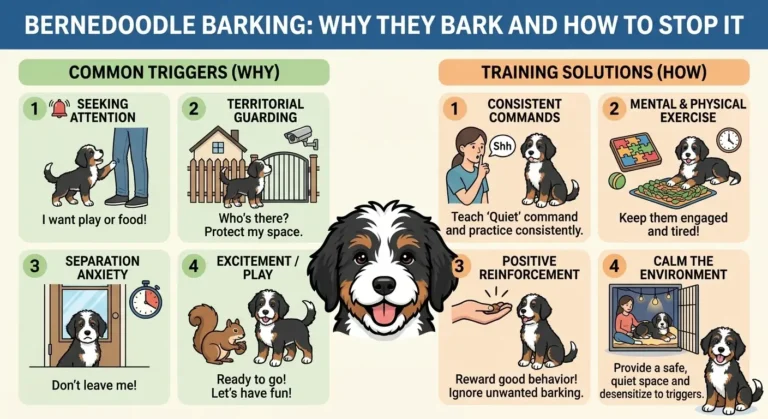
“Your bernedoodle Barking too much? See how to stop Bernedoodle barking.”
Frequently Asked Questions About Bernedoodle Puppy Biting
Why is my Bernedoodle puppy biting me so much?
Common reasons include play, exploration, teething, excitement, and overtiredness. Observe when biting happens and use toys, brief breaks from play, and rewards for calm behavior to teach appropriate alternatives.
Should I say “no” when my Bernedoodle puppy bites?
You can use a calm, consistent verbal cue, but the word alone may not teach your puppy what to do instead. Stop the interaction, redirect to a toy, and reward appropriate behavior. Avoid shouting or frightening your puppy.
Does teething make Bernedoodle puppies bite more?
Teething can increase chewing and mouthing because puppies may experience gum discomfort as adult teeth emerge. Provide suitable chew toys and monitor your puppy for signs of oral pain or other problems that require veterinary attention.
How do I stop my Bernedoodle puppy from biting during play?
Keep a toy within reach, stop play briefly when teeth touch skin, and resume when your puppy is calm. Repeat the same response consistently so your puppy learns that gentle play continues while biting ends the interaction.
How long does the puppy biting phase last?
Puppy biting often decreases as teething ends and training progresses, but there is no guaranteed timeline. Consistent management and reward-based training can help your Bernedoodle develop gentler habits.
Is my Bernedoodle puppy being aggressive when it bites?
Not necessarily. Playful mouthing is common in puppies, but biting can also occur because of fear, frustration, pain, or guarding behavior. Stiff posture, repeated painful bites, or sudden changes warrant professional assessment.
Final Thoughts
Learning how to stop a Bernedoodle puppy from biting takes patience, consistency, and an understanding of normal puppy behavior. The most useful approach is to redirect biting toward safe toys, briefly end play when teeth touch skin, reward calm choices, and provide a balanced routine of exercise, enrichment, and rest.
Every Bernedoodle develops at a different pace. Focus on small improvements rather than expecting your puppy to change overnight. With gentle, consistent training and professional support when needed, you can help your puppy learn safer ways to play and interact with your family.
One Comment